
A woman called one day with a very specific request.
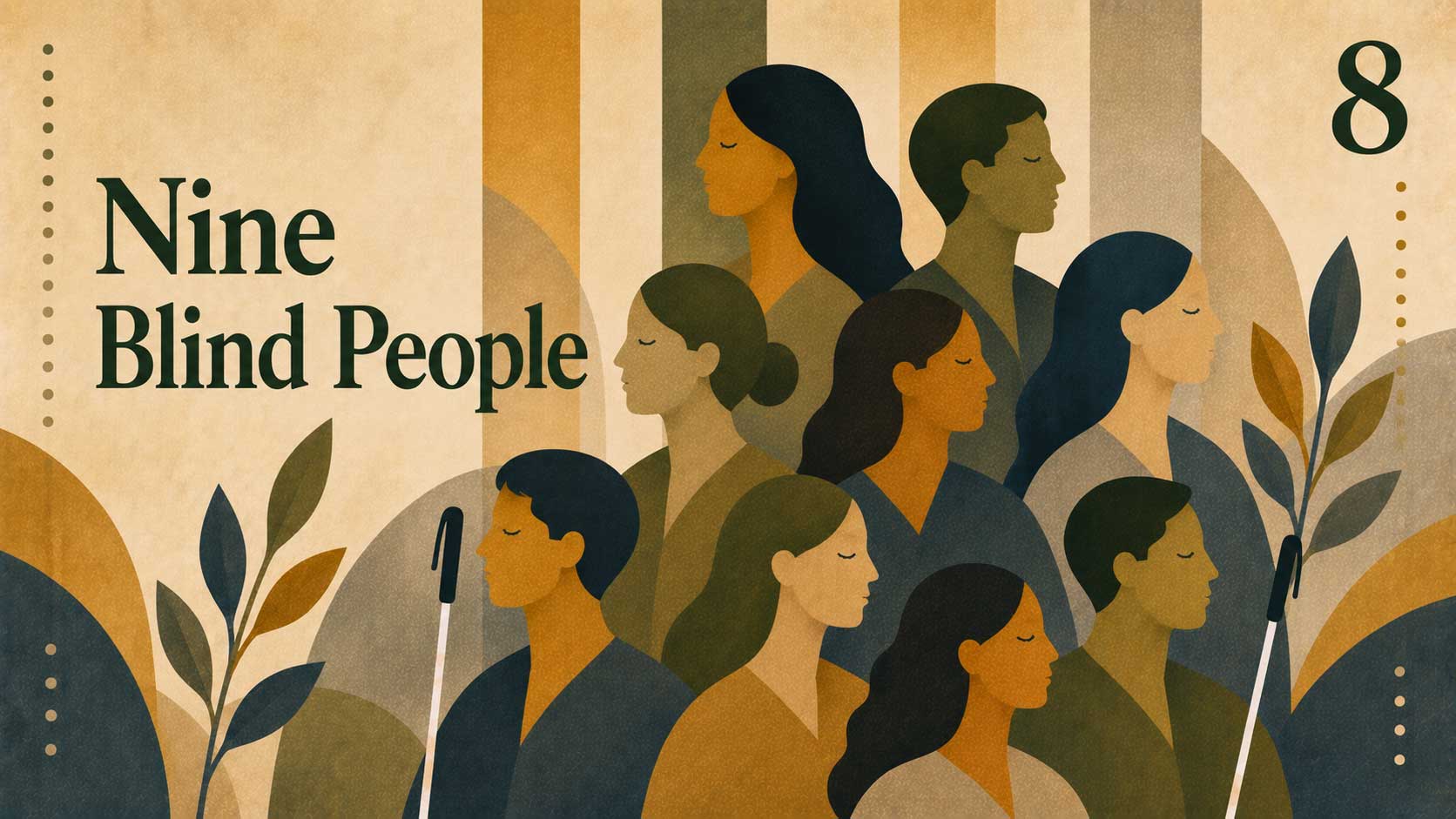
“I need nine blind people,” she said.
There was something so precise about the number that it took a moment to register. “Nine?” came the natural response.
“Yes, nine,” she repeated. She explained that her priest had advised her to feed nine blind people and give each of them a gift as part of a puja. She had heard that Antardrishti worked with blind people, and she thought we might be able to help her find them.
There was sincerity in her voice. She was not making a demand or trying to bargain. She had been told that this was something good to do, and she wanted to do it properly. Nine people had been prescribed, and she wanted nine people.
The request itself was not unusual. Over the years, people had approached us with similar intentions. Someone would be celebrating a birthday and want to feed blind people. An anniversary would bring another request. When a new shop or office opened, someone might decide that the occasion should begin with a charitable act. Sometimes food was offered; sometimes clothes or gifts. Occasionally there was a request to arrange a few blind people for the occasion, and sometimes the first question was simply, “How many blind people do you have?”
There was nothing wrong with wanting to share food or happiness. Feeding someone is not a bad act, and neither is giving a gift. In many families, such gestures are part of how people express gratitude, celebrate an important day or seek blessings. The woman on the phone was doing what she believed was right, and there was no reason to doubt the sincerity of that intention.
But slowly, another pattern became visible.
In the name of charity, blind people were sometimes being collected to complete someone else’s story.
A birthday needed a charitable act, so blind people were brought in. A new shop needed blessings, so blind people were invited. A religious ritual required nine people, so nine blind people had to be found. The occasion came first, the act was decided, and only then were the people found who could occupy the receiving end of it.
The more we encountered such requests, the more the question of numbers began to bother us. Someone might ask how many blind people were associated with an organisation, and on the surface it sounded like a question about reach. But numbers can quickly acquire a life of their own. A larger number makes an organisation appear larger, and a larger organisation can appear more deserving of attention and funding. The people behind the number can gradually become less important than the number itself.
Something similar was happening in these charitable requests, only from another direction. The giver already knew what they wanted to do; what remained was to find the people who could make that act possible. It could be nine people for a puja, a group for a birthday, or several people to be fed on the occasion of a shop opening. The people were not necessarily known to the giver. Their names, work, families, ambitions or everyday lives were not part of the request. What mattered was that they belonged to the category needed for the occasion.
That was what made the woman’s request stay with us.
She was not trying to do anything cruel. She genuinely believed she was doing something virtuous, and perhaps the nine people would enjoy the meal and appreciate the gifts. There was no reason to deny that the act could bring some immediate happiness. The discomfort was somewhere deeper, in the way the relationship had been defined before anyone had even met.
The nine people were needed because the ritual required nine.
That meant the number had been decided before the people had entered the story.
It made us think about how often society sees blind people through the things it wants to do for them. They are fed, given clothes, presented with gifts and sometimes photographed during these acts of generosity. The occasion is remembered as a moment of charity, and the giver goes away with the satisfaction of having done something good.
There is nothing inherently wrong with that feeling. Giving can be joyful, and generosity can make both people feel good. The question is what happens when the feeling of having given becomes more important than knowing the person who receives.
A blind person has a life beyond being someone who can be fed on a birthday or invited to a religious ceremony. They may be a teacher, student, professional, parent, chef, musician, shopkeeper or simply someone trying to get through an ordinary day. Their blindness may be one part of their life, but it does not have to be the whole of their identity.
Yet in these moments, all of that can disappear. A person becomes “a blind person who needs to be fed.” The individual is replaced by the category, and the category is then fitted into someone else’s occasion.
Perhaps that is where charity can quietly become self-centred—not because the giver is necessarily selfish, but because the act begins with the giver’s need to complete something: a religious obligation, a celebration, a gesture of gratitude, a desire to share happiness or simply the wish to feel that one has done some good.
The recipient becomes part of that story.
The woman had called looking for nine blind people. She did not know nine people; she needed nine people. There is a difference, and it is a difficult one to ignore once you have seen it.
Perhaps the more meaningful form of generosity begins somewhere else: when the person is no longer simply the recipient of an act already decided for them, but becomes a person worth knowing in their own right.
The woman had asked for nine blind people.
The request was precise, sincere and, in its own way, kind.
But it left behind a question that was much less comfortable:
Who was this act really for?
Nine people were needed, not because anyone knew nine lives that needed to be celebrated, but because a ritual required nine people. And somewhere inside that number, it was possible for the people themselves to disappear.